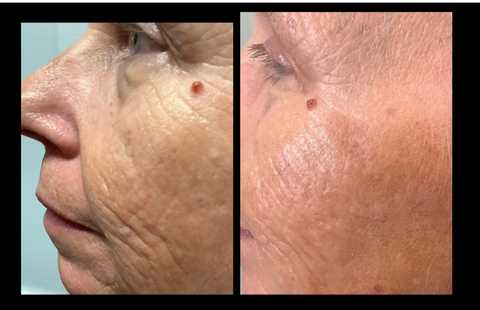
How the method works
High-frequency medical-grade Super Frax delivers focused energy that cauterizes and removes small skin growths. A specialized micro probe remains above the skin's surface, transferring energy without cutting. That contactless approach lets the clinician target the base of benign growths—like skin tags—so the treated tissue is cauterized and removed while surrounding skin is preserved.
Results depend on growth size, depth, and individual healing response; clinicians assess each lesion before treatment to determine suitability. Because the device cauterizes tissue rather than cutting, healing follows a surface repair process influenced by sun exposure and personal skin response—factors that shape outcomes for Longwood clients.
What to expect during treatment
Appointments are brief; most High Frequency sessions are scheduled as express treatments. The clinical step uses a micro probe positioned above the skin while the clinician applies controlled energy to the targeted growth. The in-room portion typically fits into a short visit, and many Longwood clients book around commutes or between errands.
A single treatment session is offered for $45 and takes about 15 MINUTES, making it suitable for quick appointments before or after work or SunRail trips. Because the probe does not cut, recovery is generally a surface healing process; clinicians will advise specific aftercare to support clean healing and reduce pigmentation risks.
Aftercare and seasonal timing
Aftercare instructions focus on keeping the treated area clean, protected, and out of direct sun while it repairs. Because Longwood's humid subtropical climate and outdoor lifestyle expose skin frequently, following those instructions matters for even healing. Staff will give clear steps and recommend when to return for reassessment if needed.
We schedule many procedures in Jan, Feb, Oct, and Nov because autumn and winter bring lower sun exposure, which helps skin heal with less pigmentation risk. Local clients often time removal before Longwood park outings or Lake Mary festivals; weekend appointments work well for commuters balancing work and family schedules near I‑4 and SunRail.